Rwanda is home to remarkable natural landscapes and historical destinations that tell the story of…
Congo Nile Trail in Rwanda: Route, Hiking, Cycling and What to Expect
Rwanda is famous for its mountain gorillas, national parks and beautiful landscapes, but there is another incredible adventure waiting for travelers in the western part of the country: the Congo Nile Trail.
Stretching approximately 227 kilometres along the shores of Lake Kivu, the Congo Nile Trail is one of Rwanda’s most rewarding outdoor experiences. It takes travellers through green hills, traditional villages, coffee plantations, tea fields and beautiful lakeside communities.
Whether you enjoy hiking, mountain biking, photography or discovering local cultures, this scenic route offers a different way to experience Rwanda beyond its famous wildlife attractions.
In this guide, we explore the Congo Nile Trail, its route, hiking and cycling experiences, highlights, preparation tips and the best time to visit.
What Is the Congo Nile Trail?
The Congo Nile Trail is a long-distance hiking and cycling route in western Rwanda that follows the beautiful landscape surrounding Lake Kivu.
The trail stretches approximately 227 kilometres between Rubavu, in the north, and Rusizi, in the south. It passes through several communities and districts, including Rutsiro, Karongi and Nyamasheke.
Despite its name, the trail does not cross into the Democratic Republic of Congo or follow the Nile River. Its name comes from the Congo-Nile watershed, which separates the drainage basins of the Congo River and the Nile.
The route gives visitors an opportunity to explore Rwanda’s countryside while enjoying views of Lake Kivu, meeting local communities and discovering the country’s agricultural landscapes.
Where Does the Congo Nile Trail Start and End?
The official route starts in Rubavu, also known as Gisenyi, near the northern end of Lake Kivu, and finishes in Rusizi, also known as Cyangugu, in the south.
Along the way, travellers encounter different landscapes and communities.
Some of the main areas along the route include:
- Rubavu (Gisenyi): The northern starting area, known for its Lake Kivu waterfront and relaxed atmosphere.
- Rutsiro: An area of green hills, agricultural communities and beautiful lake views.
- Karongi (Kibuye): A scenic lakeside town surrounded by hills and islands.
- Nyamasheke: An area known for its rural landscapes, coffee-growing communities and tea plantations.
- Rusizi (Cyangugu): The southern endpoint of the trail.
Travellers do not have to complete the entire route. It is possible to explore individual sections depending on available time, fitness and travel interests.
Hiking the Congo Nile Trail
Hiking the Congo Nile Trail is an excellent way to discover Rwanda at a slower pace.
The walking route takes approximately ten days to complete, although the duration depends on the chosen stages, walking speed and arrangements along the way.
Unlike conventional hiking routes that mainly pass through remote wilderness, the Congo Nile Trail connects travellers with everyday Rwandan life.
During the journey, hikers can experience:
- Walking through traditional Rwandan villages.
- Exploring green hills and countryside.
- Discovering coffee and tea-growing areas.
- Enjoying panoramic views of Lake Kivu.
- Meeting local residents and learning about rural life.
- Visiting beautiful lakeside communities.
The trail includes challenging climbs and descents, so a reasonable level of physical fitness is recommended.
Travellers who do not have enough time for the full journey can choose shorter sections.
Cycling the Congo Nile Trail
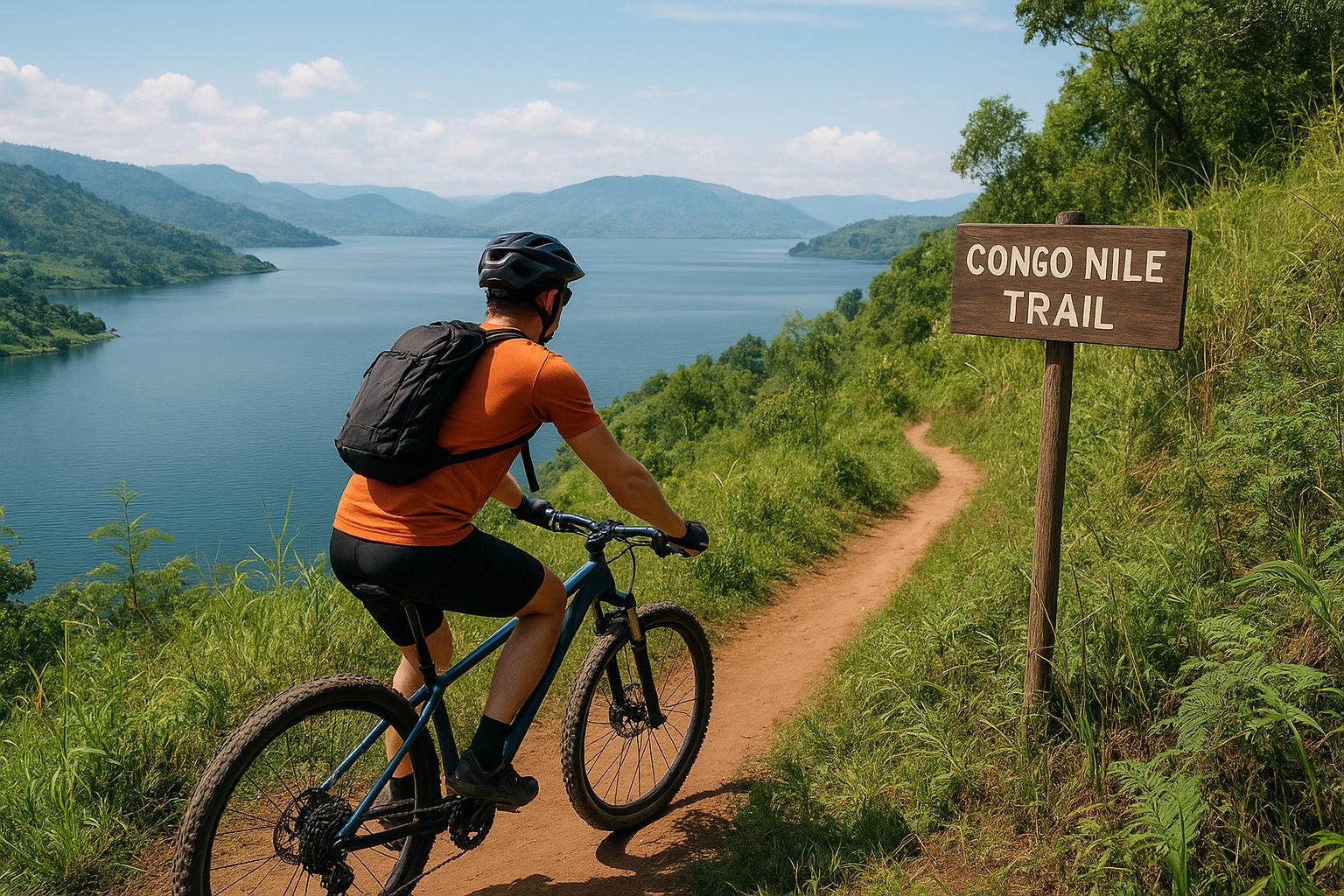
For mountain biking enthusiasts, the Congo Nile Trail offers an exciting multi-day cycling experience.
The complete route takes approximately five days by bicycle, depending on the itinerary, cycling ability and road conditions.
Cyclists travel through a combination of rural roads, unpaved tracks, hills and lakeside landscapes.
Some sections are physically demanding because of steep climbs and uneven surfaces. A suitable mountain bike and appropriate cycling equipment are therefore important.
Cycling highlights include:
- Beautiful views of Lake Kivu.
- Challenging countryside climbs.
- Coffee and tea plantations.
- Rural villages and local markets.
- Scenic downhill sections.
- Opportunities to interact with local communities.
Travellers should plan their accommodation, meals, luggage arrangements and route navigation before starting a multi-day cycling trip.
What Can You See Along the Congo Nile Trail?
One of the most rewarding parts of the Congo Nile Trail is the variety of landscapes and experiences along the way.
1. Lake Kivu Landscapes
Lake Kivu is one of the most beautiful natural attractions in Rwanda. Its surrounding hills, green landscapes and scattered islands create spectacular views throughout the journey.
Visitors can enjoy photography, peaceful lakeside moments and opportunities to discover the communities living around the lake.
2. Coffee Plantations
Rwanda is known for its coffee production, and the Congo Nile Trail passes through areas where coffee is an important agricultural activity.
Depending on local availability and arrangements, visitors can discover how coffee is grown, harvested and processed.
3. Tea Plantations
The western part of Rwanda is also known for its green agricultural landscapes and tea-growing areas.
The plantations provide beautiful scenery and an opportunity to learn about one of Rwanda’s important agricultural products.
4. Traditional Fishing Communities
Along Lake Kivu, visitors can encounter fishing communities whose daily activities are closely connected to the lake.
Observing traditional fishing practices and learning about local livelihoods adds a cultural dimension to the adventure.
5. Rural Villages and Local Culture
The trail passes through communities where visitors can experience everyday life in rural Rwanda.
Travellers may encounter local markets, farms, schools and small businesses while enjoying the hospitality of the people they meet.
How Long Does It Take to Complete the Congo Nile Trail?
The time required depends on how you choose to explore the route.
Here is a general planning guide:
| Activity | Approximate duration |
|---|---|
| Full trail by bicycle | 5 days |
| Full trail on foot | 10 days |
| Short cycling experience | Depends on the selected section |
| Short hiking experience | Depends on the selected section |
These are general planning estimates, not fixed schedules. Actual travel time depends on fitness, weather, route conditions and overnight arrangements.
Best Time to Explore the Congo Nile Trail
Rwanda can be visited throughout the year, but weather conditions can influence the experience of hiking and cycling.
The drier periods are generally more convenient for outdoor adventures.
June to September
This is a good period for hiking and cycling because rainfall is generally lower, making many outdoor activities more comfortable.
December to February
Another favourable period for exploring the trail, with generally drier conditions.
March to May and October to November
These are wetter periods in Rwanda. Rain can make some unpaved sections slippery and more challenging, particularly for cyclists.
Travellers should check local weather conditions before departure and remain flexible with their itineraries.
What Should You Pack for the Congo Nile Trail?
Proper preparation can make your experience more comfortable and enjoyable.
Consider bringing:
- Comfortable hiking boots or suitable cycling shoes.
- Lightweight and breathable clothing.
- A waterproof jacket.
- Sunscreen and a hat.
- Reusable drinking water bottles.
- A small backpack.
- Personal toiletries.
- Insect repellent.
- A camera or smartphone.
- A basic first-aid kit.
- Appropriate cycling equipment if biking.
For longer journeys, arrange sufficient drinking water, meals, accommodation and luggage transportation in advance.
Is the Congo Nile Trail Suitable for Beginners?
The Congo Nile Trail can be enjoyed by travellers with different levels of outdoor experience, but the difficulty depends on the selected section and activity.
Beginners may prefer shorter sections rather than attempting the entire route immediately.
For hiking, comfortable walking shoes and reasonable physical fitness are important.
For cycling, beginners should consider their experience with hills, unpaved roads and longer distances before choosing a multi-day itinerary.
Travelling with a knowledgeable local guide can also make navigation and cultural experiences easier.
Why Include the Congo Nile Trail in Your Rwanda Trip?
The Congo Nile Trail offers something different from Rwanda’s traditional safari and wildlife experiences.
It allows travellers to explore the countryside, enjoy the scenery around Lake Kivu and connect with local communities.
It can also be combined with other destinations in western Rwanda, depending on the length of your holiday.
For travellers interested in discovering more than Rwanda’s famous national parks, the trail is an excellent addition to a longer itinerary.
Plan Your Congo Nile Trail Adventure in Rwanda
Exploring the Congo Nile Trail is an opportunity to experience Rwanda’s natural beauty, local culture and outdoor adventures.
Whether you choose hiking, mountain biking or a shorter scenic section, the journey offers unforgettable views of Lake Kivu and the surrounding countryside.
If you are planning a visit to Rwanda, consider including the Congo Nile Trail in your travel itinerary and discover another side of the country’s beauty.
Ready to explore Rwanda? Contact our team at Gorilla Trek in Rwanda for assistance with planning your visit and discovering more experiences across the country.
Related Posts